
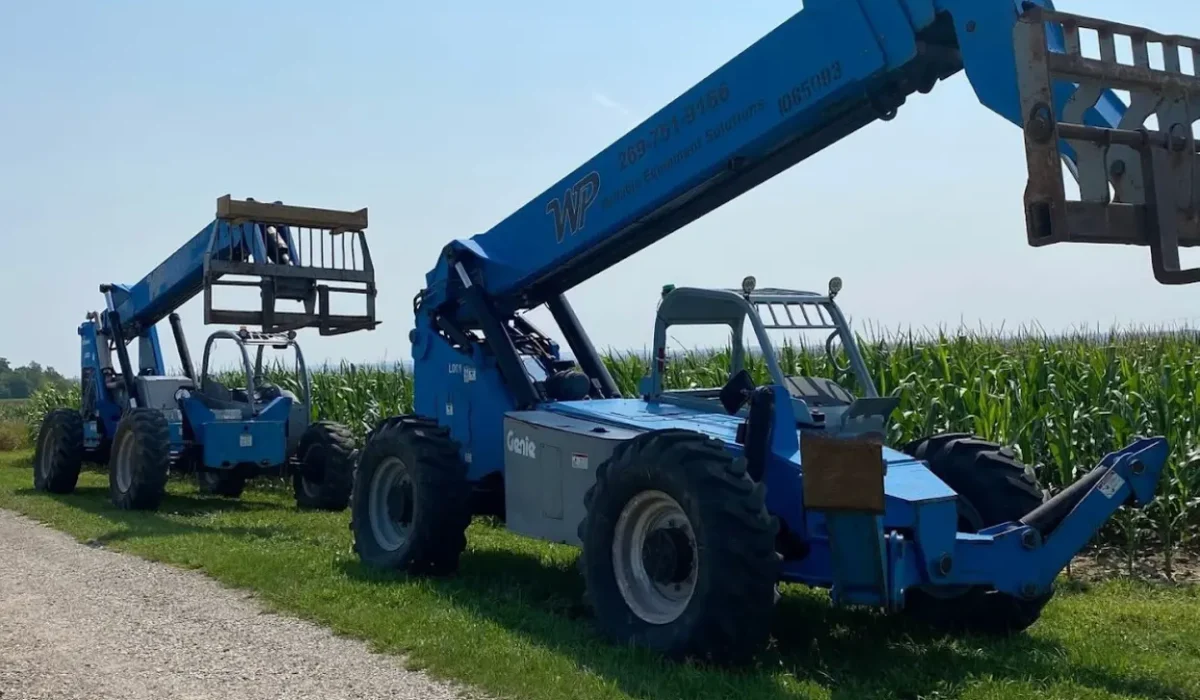
What Is a Telehandler? Everything You Need to Know
When it comes to moving materials safely and efficiently, few machines match the versatility of a telehandler. Known for their powerful lifting capabilities and extended reach, telehandlers have become essential across industries like construction, agriculture, and material handling. Whether you’re new to the equipment or comparing it to a traditional forklift, understanding how a telehandler works can help you choose the right machine for your next project.
Understanding What a Telehandler Is
A telehandler—short for telescopic handler—is a heavy-lifting machine equipped with a telescopic boom that extends both forward and upward. This boom design allows it to lift, move, and position loads at different heights and distances, bridging the gap between a forklift and a crane.
Unlike a standard forklift that lifts only vertically, a telehandler’s extendable arm lets operators reach rooftops, scaffolding, or over obstacles with precision and control—making it one of the most adaptable tools on a job site.
How a Telehandler Works
A telehandler’s performance comes from its hydraulically powered boom and flexible attachment system. Together, these features allow a single machine to perform multiple lifting and material-handling tasks.
Here’s how it functions:
- Telescopic Boom: Extends upward and outward hydraulically, offering wide reach and lifting flexibility.
- Attachment System: A quick-connect coupler allows fast changes between forks, buckets, or jibs.
- Four-Wheel Drive & Steering: Most models handle all terrains with front-wheel, four-wheel, and crab steering options.
- Hydraulic Control System: Enables smooth, stable lifting and extension movements.
- Operator Cab: Enclosed, ergonomic cabs provide comfort, control, and visibility for safe operation.
This combination of reach, stability, and adaptability allows telehandlers to replace multiple machines on site—saving time, space, and cost.
Telehandler vs. Forklift – What’s the Difference?
At first glance, a telehandler and a forklift may seem similar; they both lift and move materials, but their designs and capabilities set them apart.
Here’s how they differ:
- Lifting Mechanism:
- Forklift: Uses a vertical mast to lift loads vertically.
- Telehandler: Features a telescopic boom that extends both upward and forward for greater reach.
- Terrain and Mobility:
- Forklift: Best suited for smooth, flat surfaces such as warehouse floors.
- Telehandler: Built for rough, uneven, or outdoor job sites, often with four-wheel drive for added stability.
- Load Capacity and Height:
- Forklift: Typically handles moderate loads and limited lift heights.
- Telehandler: Can lift heavier materials to much greater heights, sometimes several stories high.
- Versatility:
- Forklift: Primarily designed for palletized material handling.
- Telehandler: Can perform multiple roles with different attachments, combining the functions of a forklift and a small crane.
In essence, telehandlers bring together the power, reach, and adaptability needed for large-scale or outdoor work where a standard forklift would fall short.
When to Choose a Telehandler Over a Forklift
A telehandler is the better choice when your work involves extended reach, uneven ground, or multi-task operations. Construction sites, farms, and outdoor yards often rely on telehandlers because they can maneuver in tight or elevated spaces where forklifts cannot.
Forklifts still excel in warehouses and controlled indoor settings, but for outdoor lifting, height, or distance, telehandlers lead the way.
Common Uses of a Telehandler
1. Construction and Industrial Applications
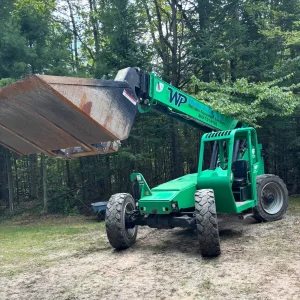
Telehandlers are invaluable for lifting and positioning materials such as beams, trusses, or pallets of bricks. Their reach allows crews to deliver supplies directly to upper levels or hard-to-access spots without cranes.
2. Agricultural and Landscaping Work
In agriculture, telehandlers handle feed bags, hay bales, soil, and gravel with ease. With quick attachment changes, one machine can load, lift, and transport materials throughout the day—boosting efficiency on the farm or job site.
3. Warehouse and Material Handling
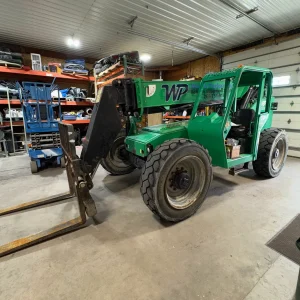
Though less compact than forklifts, telehandlers are useful in large warehouses or yards for lifting oversized or stacked inventory, offering excellent reach and load capacity.
Types of Telehandlers
Fixed Boom Telehandlers
These are the most common telehandlers, designed with a fixed boom that extends only in one direction. They’re sturdy, simple to operate, and ideal for standard lifting and material-handling tasks.
Rotating Telehandlers
Rotating models feature a boom that can swivel 360 degrees, eliminating the need to reposition the entire machine. This feature saves time and increases safety in confined or complex work zones.
Compact Telehandlers
Compact telehandlers are smaller in size but powerful in performance. They’re designed for jobs that require agility in tight spaces—such as small construction sites, barns, or warehouses—while still offering impressive lifting capacity.
Important Telehandler Features and Attachments
Boom Length and Reach
The telescopic boom is the defining feature of a telehandler. Depending on the model, it can extend anywhere from 15 to 55 feet, allowing for both short- and long-distance lifting applications. The longer the boom, the higher and farther you can safely place materials.
Load Capacity and Stability Systems
Telehandlers handle loads between 4,000 and 12,000 pounds. Built-in systems—such as outriggers, counterweights, and load sensors—ensure balance and safety even at full extension.
Common Attachments (Buckets, Pallet Forks, Lifting Jibs)
What makes telehandlers truly versatile is their compatibility with multiple attachments.
- Buckets: Great for moving loose materials like dirt, gravel, or sand.
- Pallet forks: Ideal for transporting palletized goods and construction supplies.
- Lifting jibs or hooks: Used for hoisting suspended loads similar to a crane.
By swapping attachments, one telehandler can handle an entire day’s worth of varied tasks without additional equipment.
Telehandler Safety Tips and Operator Best Practices
Safety should always come first when operating a telehandler. Following these best practices helps prevent accidents, protect your team, and extend the life of the machine.
- Perform Daily Inspections: Check the tires, brakes, hydraulic fluids, and attachment locks to ensure everything is in proper working order.
- Always Respect the Load Chart: Never guess a load’s weight or the boom’s reach. Always consult the telehandler’s load chart to avoid overloading the machine, which can cause it to tip.
- Ensure Proper Training and Certification: Only certified operators should ever be behind the controls of a telehandler. Proper training ensures the operator fully understands the machine’s functions, limitations, and safe operating procedures.
- Maintain Situational Awareness: Never lift loads over people or active work zones, and always check for overhead obstacles like power lines before extending the boom.
Telehandler Rental in West Michigan – When You Need Power and Reach
Why Rent a Telehandler Instead of Buying One
Why commit to buying when your project has a deadline? Renting a telehandler offers the perfect blend of power and flexibility without the long-term costs of ownership and maintenance. It gives you access to top-tier equipment exactly when you need it, making it the ideal solution for maximizing your project’s budget and efficiency.
How Winde Performance Can Help
At Winde Performance, we do more than just rent equipment—we provide solutions. We’ll help you match the right telehandler to your unique challenge, whether you’re navigating a tight construction site or managing materials across a sprawling property. Our West Michigan fleet is meticulously maintained and ready to perform, giving you the confidence to tackle any job.
Is a Telehandler Right for Your Next Project?
A telehandler is more than just a piece of lifting equipment—it’s a productivity booster that adapts to nearly any work environment. By providing unmatched reach and all-terrain stability, it saves you time, labor, and logistical headaches.
If your next project calls for this level of performance, let’s talk. Contact us today, and our expert team will guide you through our rental fleet to help you achieve your goals.